


Aging starts in your cells.
We target it at the source. A systems approach to the biology that determines how fast you age.
Explore the frameworkEngineered to perform at the biological level.
You optimize your career. Your portfolio. Your training. Protocol 01 is the system that optimizes the biology underneath all of it. Every day your cells absorb damage from stress, sleep disruption, metabolic load, and environmental exposure. Most of it compounds silently. Protocol 01 is designed to address it at the source.
What the protocol is doing, and when.
Levels build.
The loading phase. Daily intake builds consistent levels of NMN, the methylated B vitamins, and the rest of the formula. Nothing in this protocol is designed to work on day one.


Fully loaded.
Every pathway in the system is now under continuous support. Spermidine and Ca-AKG operate on slower timelines than the energy compounds, by design.


Your first re-test window.
Three months is the shortest interval over which most panels are meaningfully re-testable. We tell you when to look, not what you will see.


Consistency compounds.
The protocol is engineered for years, not weeks. Adherence is the variable that matters more than any single compound.


This is not a supplement stack. It is an engineered system where every compound earns its place through published evidence, clinical dosing, and cross-hallmark optimization. Below is how we built it.
See the frameworkThe 14 Hallmarks
The biology of aging, mapped.
Aging is not a single failure. It is fourteen interconnected biological changes that compound over time. Protocol 01 is mapped against the full matrix.
This section describes the biology of aging. It is not a description of what Protocol 01 does.
Optimization Layer 2
Hallmarks of AGING
The 14 Hallmarks of Aging describe the measurable biological consequences of aging.
Upstream cellular pathways drive these changes. The hallmarks allow us to observe and measure the downstream effects.
Our approach focuses on influencing the pathways so their impact on the hallmarks is reduced.
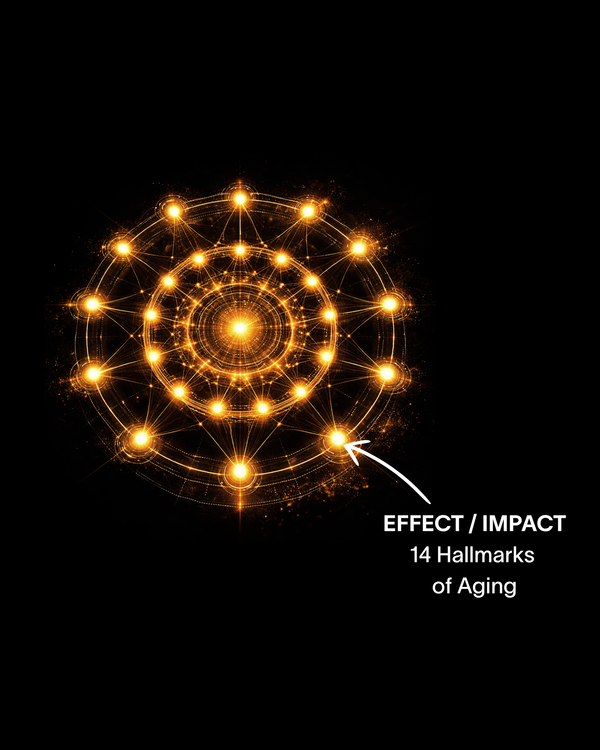

Hallmarks of Aging Framework
Upstream
Cellular
Damage
Downstream
System
Failure
Initiating Damage
Upstream sources of cellular damage
Amplifying Response
Beneficial at low levels, harmful when chronic
System-Level Failure
Downstream consequences of accumulated damage
Not all hallmarks play the same role in aging. Some represent upstream sources of cellular damage, while others reflect downstream consequences that emerge over time.
Our optimization model accounts for this structure. By focusing on upstream biological drivers, interventions can influence multiple aging processes at once.
The diagram illustrates how the 14 hallmarks interact across this upstream-to-downstream architecture. The two added in 2025, extracellular matrix changes and psychosocial isolation, sit in the integrative tier, where how you live shows up in your biology.

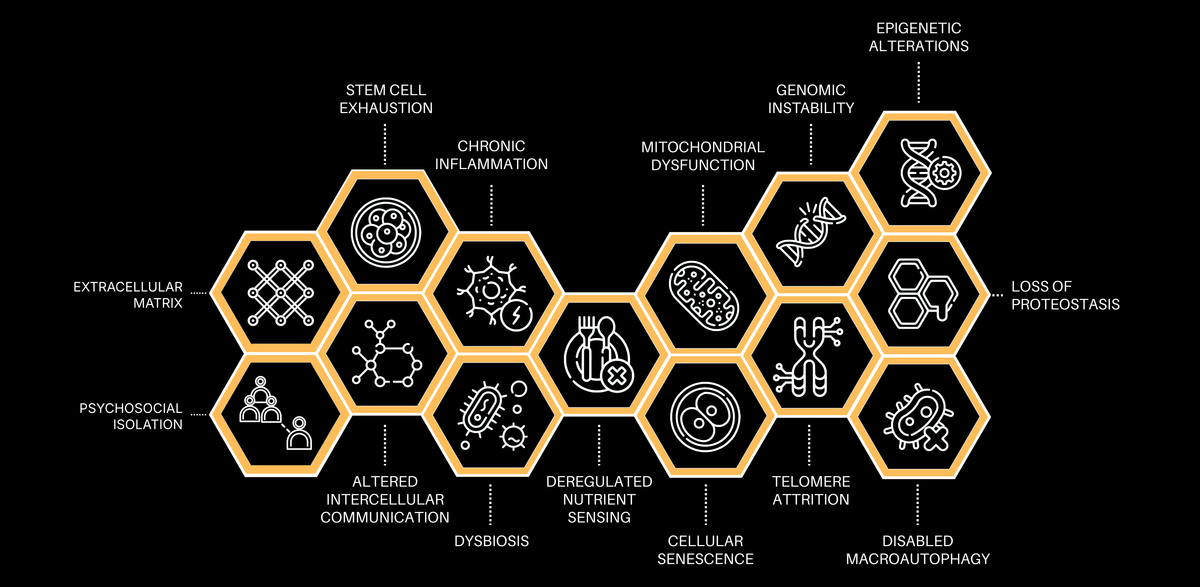
Deep Dive
Explore each hallmark.
Select any hallmark below to learn what it is and why it matters.
Genomic Instability
DNA Damage
DNA Wear and Tear
Your DNA is the instruction manual for your cells. Over time it collects errors. Think of an IKEA manual full of missing steps. The final product will not come together the way it should.
What it Means
DNA is constantly under stress from UV, pollution, and even normal cell processes. Over time this leads to mutations, broken strands, and faulty repairs that accumulate inside cells.
Why it Matters
- Mutations change the DNA code and disrupt normal cell activity
- Broken strands fray under stress
- Faulty repairs introduce errors that compound
- Cells malfunction, accelerating aging and increasing disease risk
Epigenetic Alterations
Gene Switch Malfunction
The Broken Light Switch
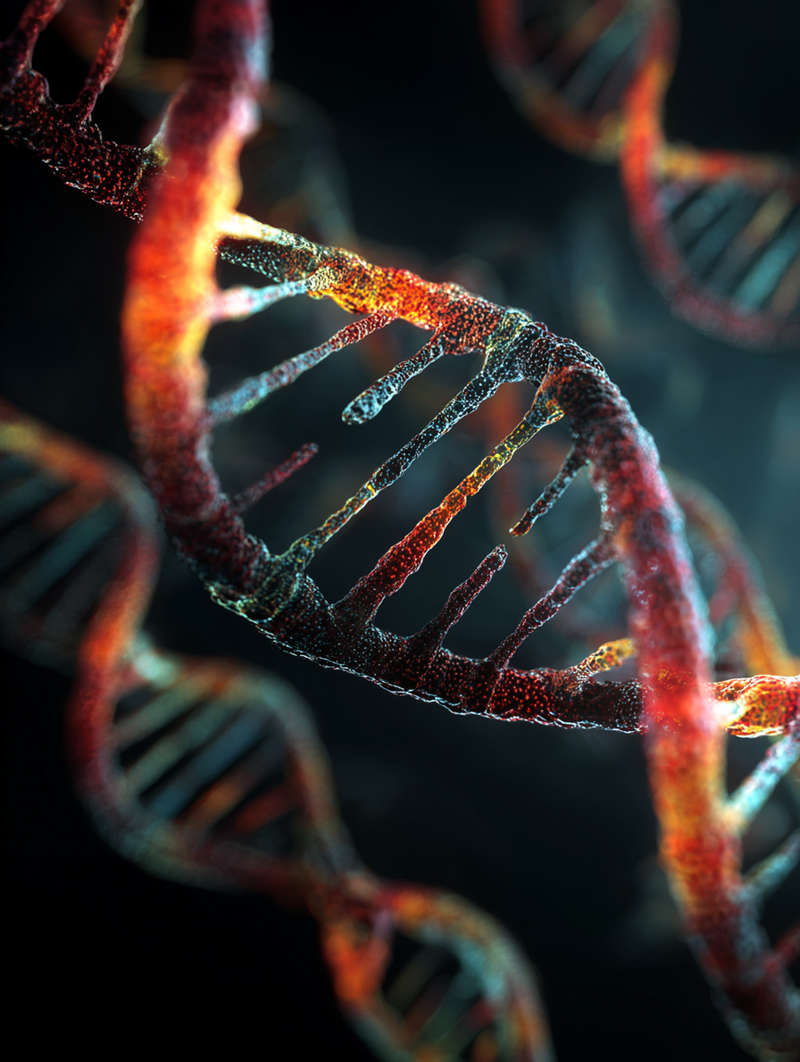
Your genes are like thousands of switches that control when functions turn on and off. With age these switches get faulty. Some stay on when they should be off. Others fail to turn on at all.
What it Means
Epigenetic changes do not alter your genes themselves but change how they are read. Over time this misregulation makes cells act older and less efficient.
Why it Matters
- Important repair genes can get silenced
- Harmful pathways can become overactive
- Accelerates biological aging and disease risk
Telomere Attrition
Chromosome End Damage
The Fraying Shoelace
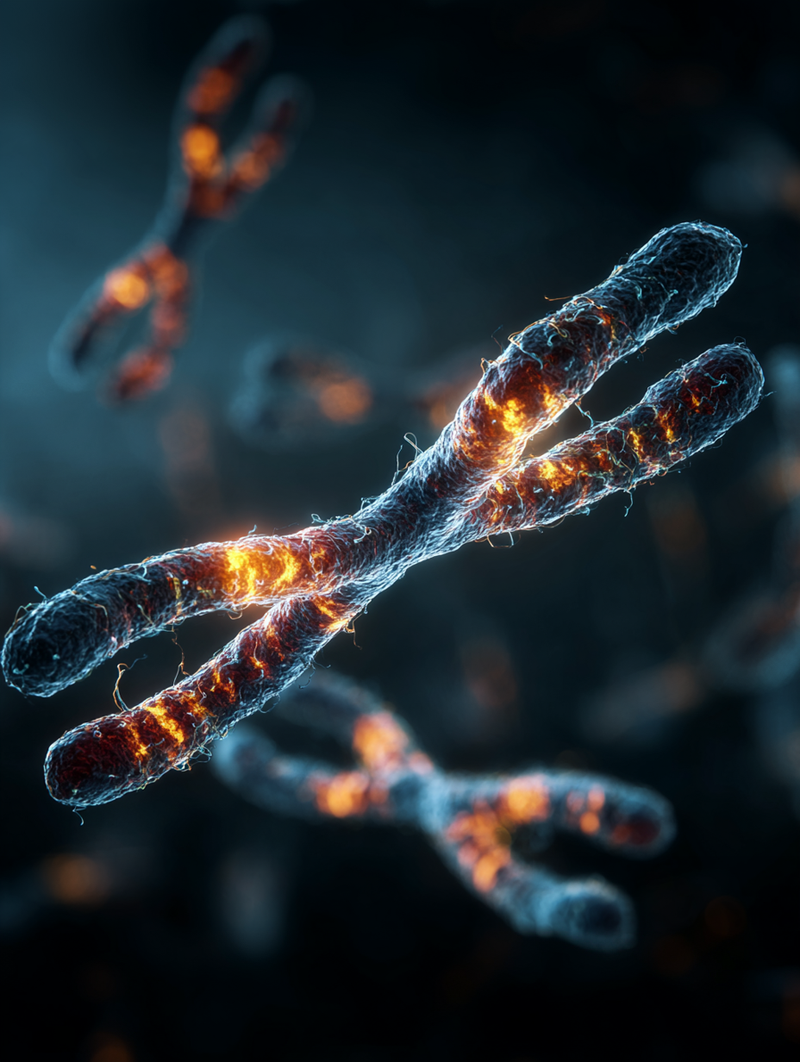
Telomeres are like the plastic tips at the ends of shoelaces, protecting your DNA from unraveling. Each time a cell divides the tips get shorter. Eventually the DNA starts to fall apart.
What it Means
Telomeres shorten naturally with age, but stress, poor lifestyle, and inflammation speed the process up. Once too short, the cell can no longer divide and becomes inactive.
Why it Matters
- Cells with short telomeres stop renewing
- Linked to weaker immunity and slower tissue repair
- One of the most reliable markers of biological aging
Disabled Macroautophagy
Recycling System Breakdown
The City Without Trash Collection
Autophagy is the body's recycling program. Cells break down and reuse old parts to stay efficient. With age this system slows, like a city where garbage trucks stop coming. Waste piles up.
What it Means
Autophagy helps clear out defective proteins and organelles. When the process falters, damaged components accumulate, weakening cells.
Why it Matters
- Clogged cells cannot recycle or repair properly
- Energy production suffers
- Accelerates aging across multiple organs
Loss of Proteostasis
Protein Buildup
Clogged Cell Machinery
Proteins are tiny machines that keep your cells running. With age, damaged or misshaped proteins pile up like broken machines on a factory floor. The whole factory slows down.
What it Means
Normally the body clears misfolded proteins. With aging that system weakens, and proteins begin clumping together, especially in brain and muscle tissue.
Why it Matters
- Protein clumps block normal cell function
- Linked to decline in brain and muscle tissue
- Accelerates decline in tissue strength and resilience

Deregulated Nutrient Sensing
Metabolic Miscommunication
The Broken Thermostat
Nutrient-sensing pathways act like a thermostat for energy, deciding when to grow, conserve, or repair. With age the thermostat malfunctions, and cells misread nutrient signals.
What it Means
Over time, pathways like insulin and mTOR get out of sync, leading to miscommunication about how the body uses energy.
Why it Matters
- Drives weight gain and insulin resistance
- Over-activates growth pathways that speed aging
- Reduces energy efficiency across the body
Mitochondrial Dysfunction
Powerhouse Decline
The Fading Batteries
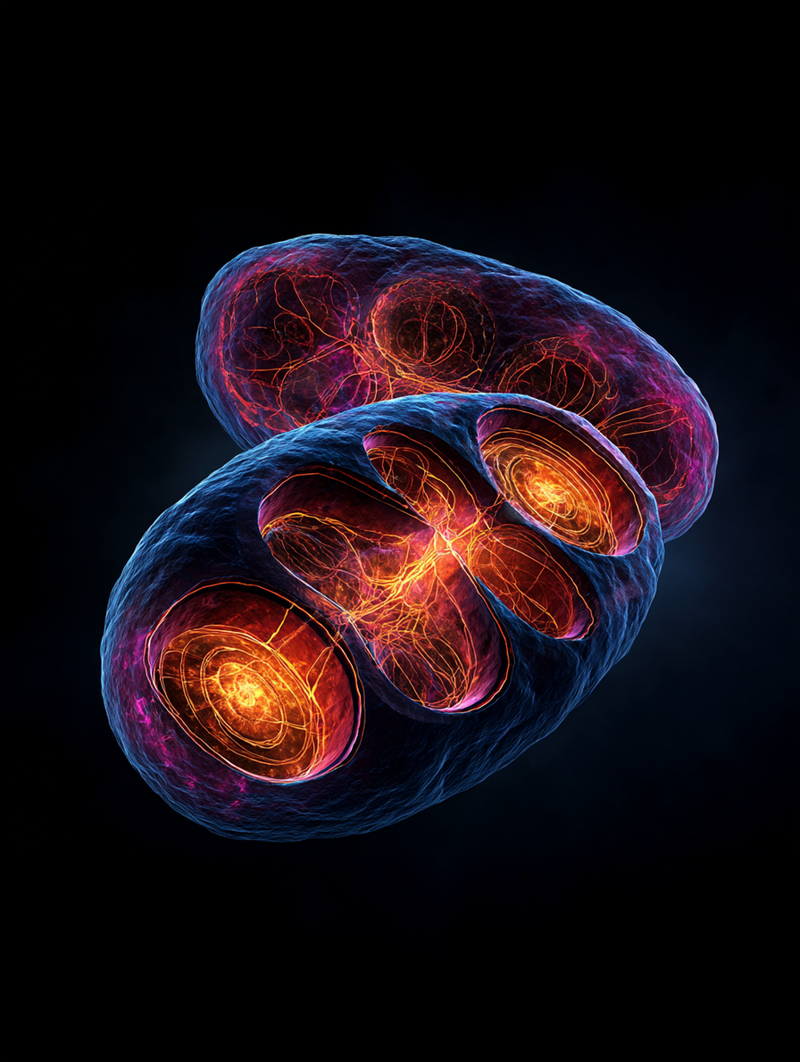
Mitochondria are your cell's batteries, powering movement, thinking, and repair. With age they produce less energy and more harmful byproducts, like a battery that leaks acid instead of holding a charge.
What it Means
As mitochondria break down, cells struggle to power basic functions. The damage also spreads oxidative stress throughout the body.
Why it Matters
- Causes fatigue and slower recovery
- Weakens brain, muscle, and heart performance
- Fuels other hallmarks like inflammation and cell death
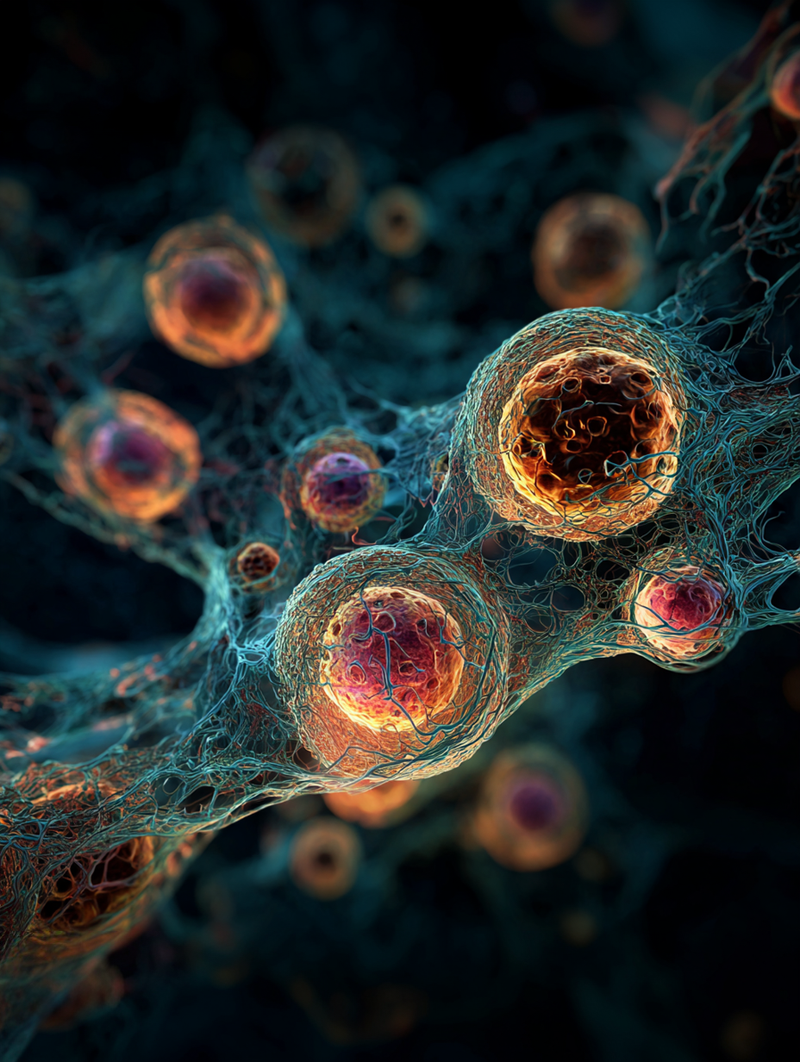
Cellular Senescence
Zombie Cells
The Bad Neighbors
Some cells stop dividing but refuse to die. They hang around like bad neighbors, blasting toxic signals that damage the whole block.
What it Means
These zombie cells release harmful molecules called SASPs, which spread inflammation and disrupt healthy tissue.
Why it Matters
- Build up with age
- Linked to joint stiffness, vascular aging, and skin aging
- Block tissue repair and accelerate decline
Stem Cell Exhaustion
Repair System Failure
The Retired Workforce
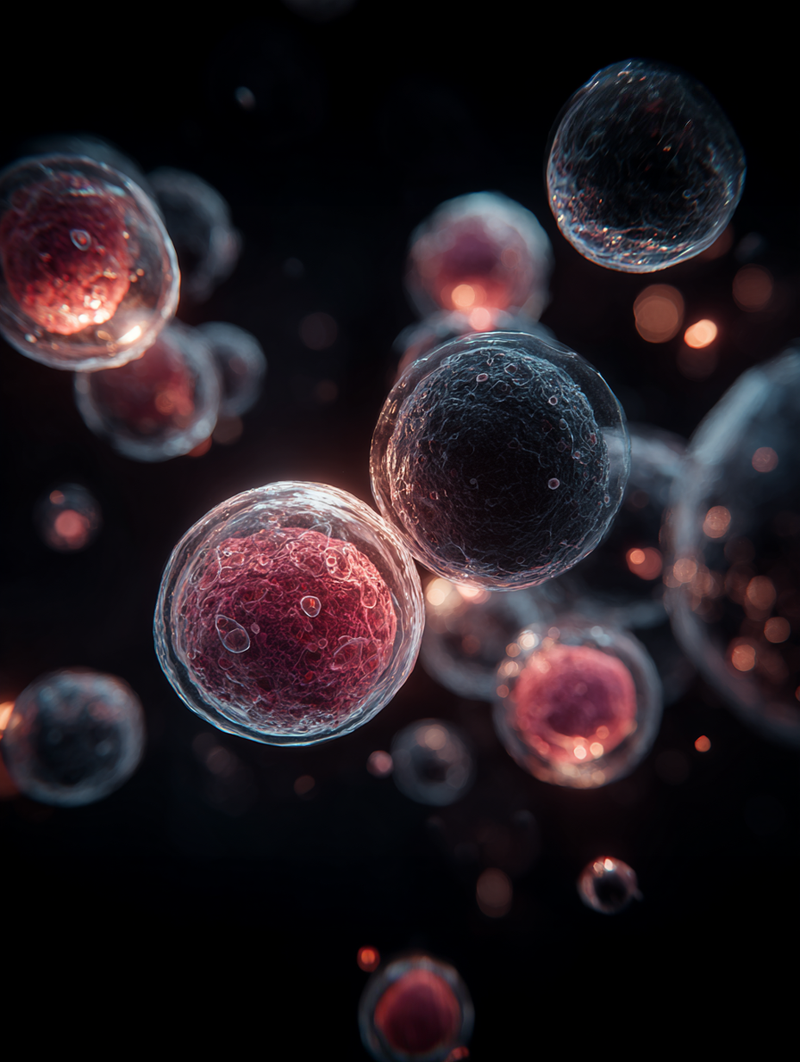
Stem cells are the body's repair crew, always ready to replace damaged cells. With age the workforce shrinks and becomes less capable, leaving tissues with no one to fix damage.
What it Means
Stem cells lose energy and numbers over time, reducing their ability to regenerate skin, muscles, blood, and other tissues.
Why it Matters
- Healing slows after injury
- Muscles, skin, and immune defenses weaken
- A major driver of frailty and age-related decline
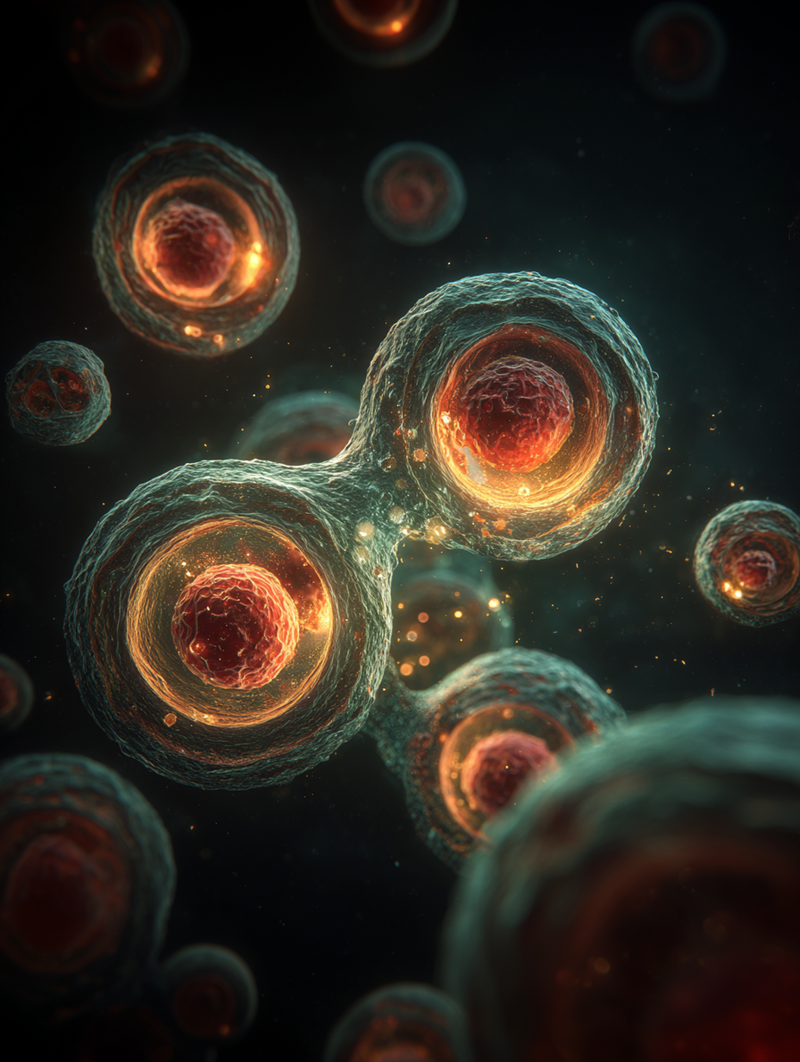
Altered Intercellular Communication
Mixed Signals
Static on the Line
Cells need clear communication to stay in sync, like radios on the same frequency. With age the signals get scrambled, creating static that confuses cells and organs.
What it Means
Aging cells release distorted signals that spread stress and inflammation throughout the body.
Why it Matters
- Weakens the immune system
- Fuels chronic inflammation
- Disrupts balance between tissues and organs
Chronic Inflammation
Inflammaging
The Smoldering Fire
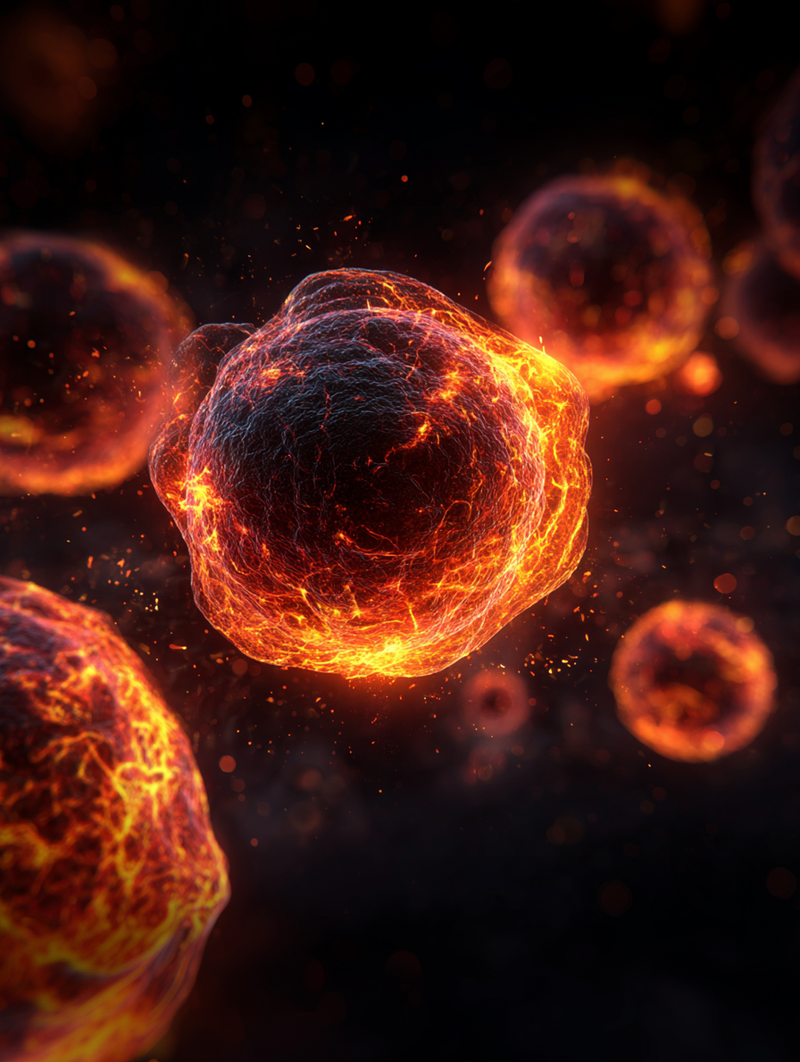
Inflammation is good in short bursts. It heals cuts and fights infections. With age the body often slips into constant low-grade inflammation, like a fire that never burns out.
What it Means
This inflammaging damages tissues slowly and silently, affecting the entire body.
Why it Matters
- Drives aging in the heart, metabolism, and brain
- Weakens healthy tissue over time
- Worsens other hallmarks of aging
Dysbiosis
Gut Microbiome Disruption
The Overrun Ecosystem"
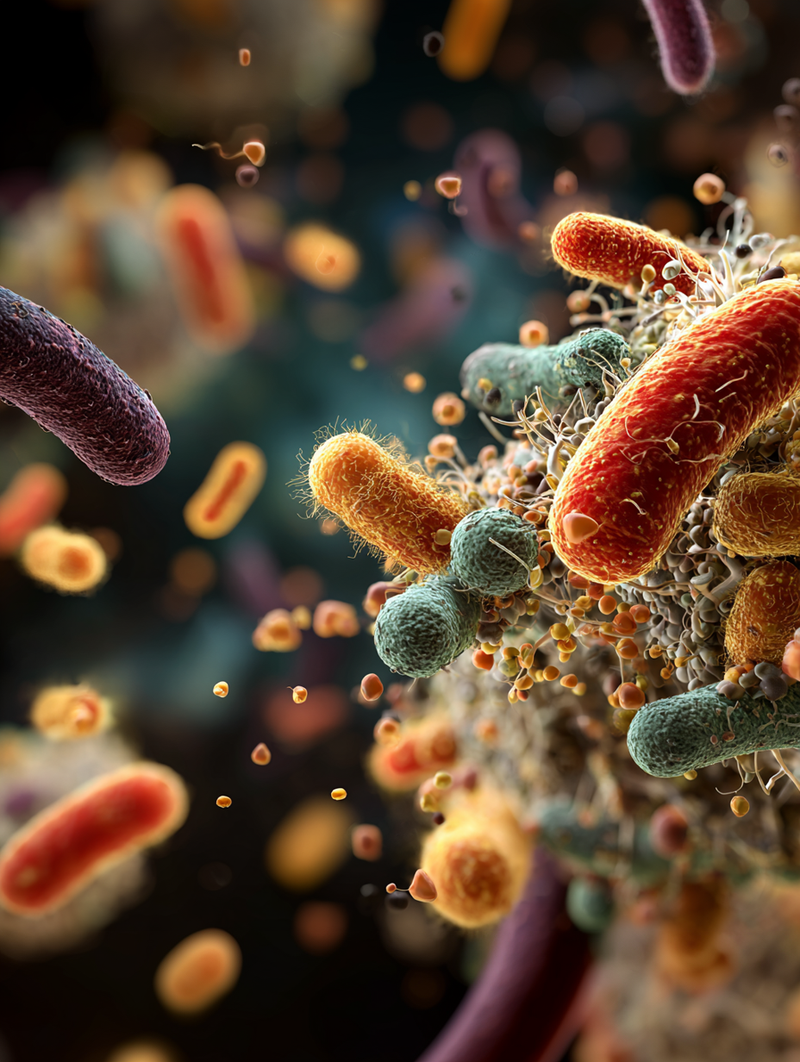
Your gut hosts trillions of bacteria that act like a rainforest ecosystem. With age, harmful species overgrow while helpful ones decline, and the ecosystem breaks down.
What it Means
This disruption, called dysbiosis, weakens the gut's ability to support digestion, immunity, and whole-body health.
Why it Matters
- Increases inflammation and weakens the gut lining
- Disrupts metabolism and nutrient absorption
- Affects immunity, mood, and brain health
Extracellular Matrix Changes
Tissue Stiffening
The Hardening Scaffold
Picture a garden trellis that was once pliable enough to re-tie around new growth. Over the years it sets hard in its old shape. The matrix between your cells does the same, and tissues that once flexed and sprang back start to hold their shape instead.
What it Means
The extracellular matrix is the scaffold between cells, built from collagen, elastin, and binding proteins. With age it accumulates cross-links and turns over more slowly. That changes how tissues respond to load and how cells read their surroundings. Added to the hallmarks framework in 2025.
Why it Matters
- Tissues stiffen and lose spring
- Cells misread a hardened environment
- Strength training is the lever that keeps the scaffold responsive

Psychosocial Isolation
Isolation
The Empty Room
Think of a house with the heat on and nobody home. The systems keep running, but with no one coming and going, the house stops being lived in and starts to wear. Long stretches without real connection do something similar to the body.
What it Means
Long-term isolation registers in the body as stress. It shifts immune signaling, sleep, and inflammation in ways that track with faster biological aging. The 2025 framework added it because the effect shows up at the molecular level, not only in mood.
Why it Matters
- Raises baseline inflammation
- Disrupts sleep and recovery
- Regular connection is the lever, and it compounds like everything else

The Optimization Engine
How Protocol 01 was engineered.
Aging is a system. We built one to match.
The TimeWarp Longevity Optimization Engine
240
Compounds evaluated
162
Pathway interactions mapped
~40K
Intervention interactions evaluated
Informed by more than 1,000 peer-reviewed studies on human aging.


TimeWarp was designed using a systems engineering approach to longevity.
Instead of optimizing single ingredients, we optimized the entire protocol across multiple biological layers.
The result is a formula designed to influence the core biology of aging while remaining practical for daily use.
Engineered for Impact:
9 Optimization Layers
We engineered the formula using a proprietary optimization model guided by nine layers of analysis:
- 1.Aging Pathways
- 2.Hallmarks of Aging
- 3.Mechanistic Scoring
- 4.Compound Universe
- 5.Evidence Mapping
- 6.Compound Interactions
- 7.Formulation & Delivery
- 8.Protocol Usability
- 9.Long-Term Safety

Design Philosophy
Systems over singles
Aging is driven by interconnected biological networks. The protocol targets the system, not individual ingredients.
Evidence over hype
Every compound is evaluated against its research base. Provisional claims are weighted differently from human clinical evidence.
Compliance is a design variable
The most optimized formula fails if people don't take it. Every design decision reduces friction and reinforces adherence.
Earned inclusion
No compound enters by default. Every ingredient passed nine layers of evaluation. High-scoring compounds were excluded. Low-scoring ones were pulled in for synergy.
The 13 upstream biological networks that drive cellular aging, mapped as the foundation of the optimization model.

The 14 measurable biological changes that accumulate over time, used to evaluate downstream impact of each intervention.
A weighted pathway-hallmark matrix that evaluates how cellular signaling networks interact to produce a structured compound score.

240 longevity molecules mapped and evaluated against the mechanistic scoring architecture.

Research-backed filtering that prioritizes compounds supported by human clinical evidence over emerging or provisional data.

Synergy, redundancy, and safety screening across the compound stack to optimize the system, not just individual ingredients.
Physical engineering and bioavailability optimization, maximizing biological impact within the constraints of a daily capsule format.

Compliance is a design variable. Functional grouping, daily sachets, and frictionless packaging reduce the protocol to a single daily action.

The final gate. Every compound evaluated for cumulative system load and sustained long-term use.
Join the Waitlist
Protocol 01 is the result of this framework.
You're on the list.
Protocol 01 · Founder's Edition


